Frontline ambulance staff to lead mental health improvement projects across the North East
Two North East Ambulance Service (NEAS) clinicians have been given the opportunity to spend a year helping improve support for people experiencing mental health challenges across the region.
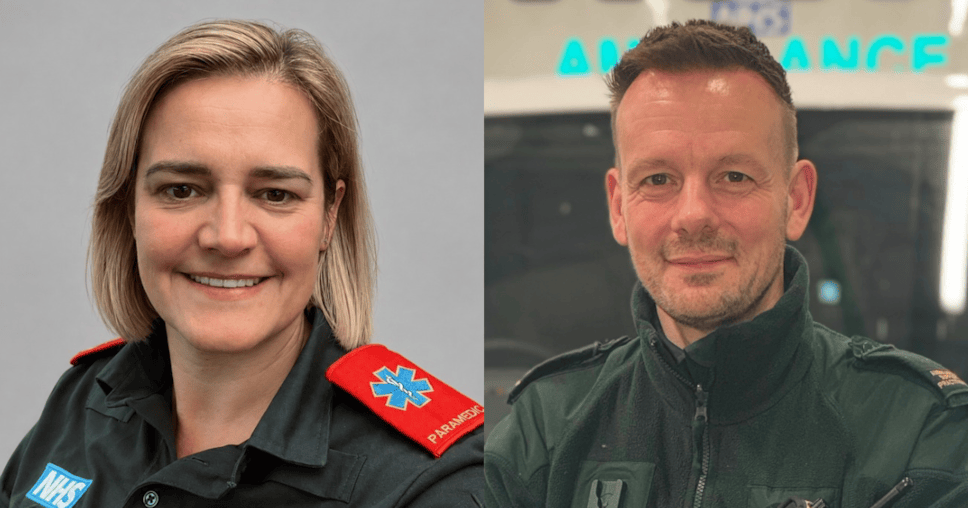
Thomas Hague, an ambulance support practitioner based at Blucher station, and Jayne Donaghue MBE, a paramedic based at Bishop Auckland station, have been appointed to the Trust's Clinical Fellowship Programme, which gives colleagues dedicated time to research issues they see first-hand on the frontline and develop recommendations to improve patient care.
The fellowships come at a time when ambulance crews are responding to growing numbers of patients whose needs extend beyond immediate medical treatment, including people experiencing mental health crises and wider social challenges that can affect their health and wellbeing.
In 2025/26, health advisors at NEAS answered more than 1.475 million emergency 999 and NHS 111 calls. More than 143,800 patients were treated at home or within their local community, reflecting the increasingly important role ambulance services play in helping people access the right care, in the right place, at the right time.
Thomas' fellowship will explore how ambulance clinicians can better connect patients with community-based support, including social prescribing services, charities and voluntary organisations, helping people access assistance for needs that may be contributing to poor health and wellbeing.
The North East experiences some of the highest levels of mental health need and health inequality in England, making effective links between healthcare services and community organisations increasingly important.
Thomas said: "I notice day to day that we are attending more and more patients in mental health crisis. We often meet people whose wellbeing is affected by factors beyond their immediate clinical needs.
"I want to explore how we can improve awareness of the support available in communities across the North East and help colleagues connect patients with services that may make a real difference to their lives.
"Hopefully, this work will help us better support patients and ensure people can access the right help when they need it."
Jayne's project will focus on what happens after an ambulance attends someone experiencing a mental health crisis in County Durham.
Working with colleagues across healthcare, mental health services and community organisations, she will explore some of the barriers that can prevent patients accessing timely support and identify opportunities for closer partnership working.
Jayne said: "You want to do the very best for every patient but knowing someone needs support and being able to connect them with it can be very different things.
"Sometimes A&E becomes the only accessible option, even when it's clear a person's needs could be better met elsewhere.
"This fellowship gives me the opportunity to bring frontline experiences together with the views of mental health and community partners so we can identify practical improvements that benefit patients and clinicians alike."
The Clinical Fellowship Programme was introduced by NEAS last year to support professional development and ensure frontline experience helps shape future service improvements.
The impact is already being seen. Last year's clinical fellow, Russell Barnard, completed a project focused on cardiac arrest care, with his recommendations now helping inform improvements across the Trust.
Andrew Hodge, director of paramedicine and allied health professionals, said: "Our frontline colleagues have invaluable experience and insight into the needs of patients and communities across the North East.
"The Clinical Fellowship Programme gives them the opportunity to turn that experience into action by researching issues they are passionate about and developing ideas that can improve care.
"Thomas and Jayne are tackling an area of growing importance for healthcare services, and their work has the potential to make a real difference for patients, colleagues and partner organisations across the region.
"It is also an important investment in our people, creating opportunities for colleagues to develop specialist expertise, leadership skills and experience that will help shape the future of care at NEAS."