Heart attack survivor reunites with ambulance service crew who saved his life
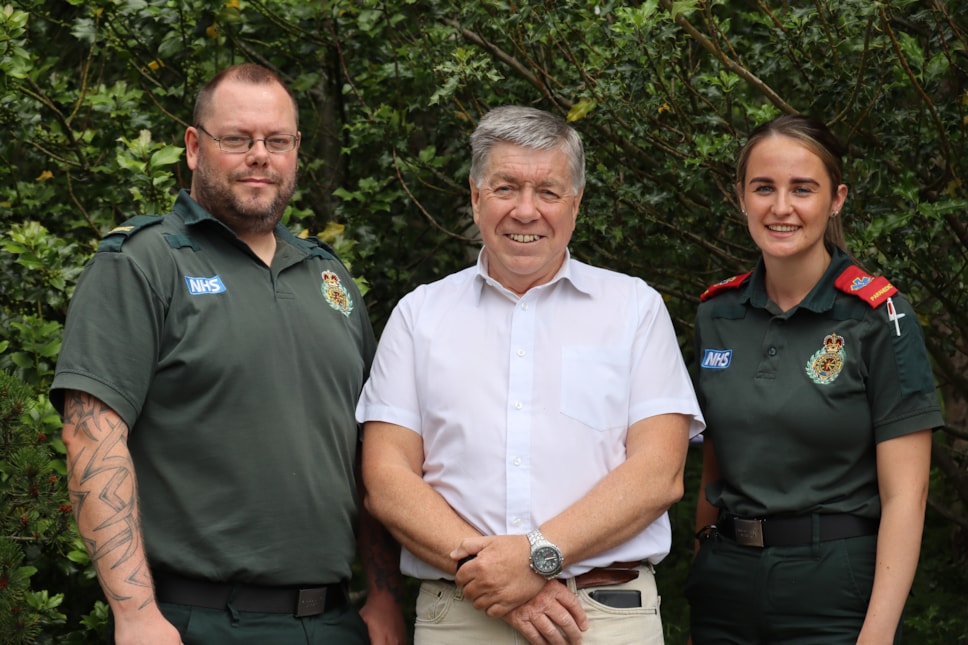
A retired man who suffered a major heart attack at home has been reunited with the North East Ambulance Service (NEAS) crew who helped save his life.
Gary Pendleton, from Durham, experienced the heart attack shortly after returning home from a gym session on 7 May 2025. Despite being physically active and having no classic chest pain symptoms, Gary quickly realised something was seriously wrong. Home alone at the time, he called 999 himself.
He said: “I was feeling hot, sweaty and increasingly unwell. I tried ringing my partner and my son but couldn’t get hold of them, so I sent them both a text saying I thought I was having a heart attack.”
As his condition worsened, Gary struggled to speak during the call but managed to give the call handler his address and medical details before ending the call. Gilesgate-based paramedic Annie O’Sullivan and Stanley-based ambulance support practitioner Paul Arkle arrived at Gary’s home shortly afterwards and immediately began assessing him.
In 2025/26, the North East Ambulance Service attended 830 patients identified as having a ST-elevation myocardial infarction (STEMI) – a serious type of heart attack caused by a complete blockage of a coronary artery. However, this does not represent the total number of heart attacks attended by ambulance crews.
While STEMIs can often be identified by clinicians at the scene using an electrocardiogram (ECG), many other types of heart attack can only be confirmed in hospital through blood tests and further investigations. Early recognition and rapid treatment remain vital, with ambulance clinicians playing a crucial role in ensuring patients receive specialist care as quickly as possible.
Gary said: “The crew immediately applied the pads for a heart monitor and said I needed taking to hospital immediately. They were totally professional throughout which was really reassuring.”
During the journey to hospital, Annie prepared for the possibility that Gary’s condition could rapidly deteriorate by applying defibrillator pads “just in case”; a decision which would soon prove lifesaving. As the ambulance approached the Freeman Hospital in Newcastle, Gary went into cardiac arrest.
A heart attack and a cardiac arrest are both medical emergencies, but they are not the same thing. A heart attack happens when blood flow to part of the heart is blocked, meaning the heart muscle is starved of oxygen. Symptoms can include chest pain, shortness of breath, sweating, nausea and feeling unwell, although, as in Gary’s case, symptoms are not always typical.
A cardiac arrest occurs when the heart suddenly stops beating effectively, causing the person to collapse and stop breathing normally. Without immediate treatment, a cardiac arrest is fatal within minutes.
Recognising the signs of both conditions early and calling 999 straight away can make a lifesaving difference, allowing ambulance crews to begin urgent treatment as quickly as possible.
Annie said: "When I attended Gary, he was acutely unwell and suffering a heart attack that was continuing to develop during the journey to hospital, which is why I applied the defibrillator pads as a precaution. It was vital that we got him to the Freeman Hospital as quickly as possible, where he could receive the specialist care needed to give him the best possible outcome.”
Gary was taken straight into theatre where doctors fitted a stent to unblock an artery. The entire process, from the onset of symptoms to treatment, took less than two and a half hours. Following 48 hours in hospital, Gary completed a 12-week cardiac rehabilitation programme before eventually returning to the gym.
Now back enjoying retirement, motorbiking, and keeping active, Gary wanted the opportunity to personally thank the crew involved in his care.
He said: “I’d love to meet the crew simply to thank them for saving my life. Annie’s forethought of applying the defib pads beforehand might well have been those few seconds that made all the difference.”
Reflecting on the experience, Gary added: “Looking back I’m glad to still be around. It’s the small things that make all the difference.
“Without NEAS I certainly wouldn’t be here. Without the dedication and commitment of the staff, the NHS would be a worse off place.”
On the opportunity to meet Gary, Annie said: “It's been really special to be reunited with Gary because we don't often get the chance to hear what happens to patients after we leave them, particularly when they've gone on to make such a good recovery. His story highlights just how important it is to seek medical attention if you're experiencing symptoms such as chest pain or shortness of breath, and the difference that early intervention can make."
Paul continued: "We don't often get the chance to meet patients again after an incident, particularly more than a year later, so it was really nice to hear how well Gary has recovered. Seeing him back enjoying life and doing the things he loves is exactly why we do this job."