North East Ambulance Service clinical fellowship helps drive improvements in cardiac arrest care
A North East Ambulance Service (NEAS) clinical team leader is leading innovative work to help improve survival rates from cardiac arrest by using technology and data to strengthen learning, feedback, and patient care.
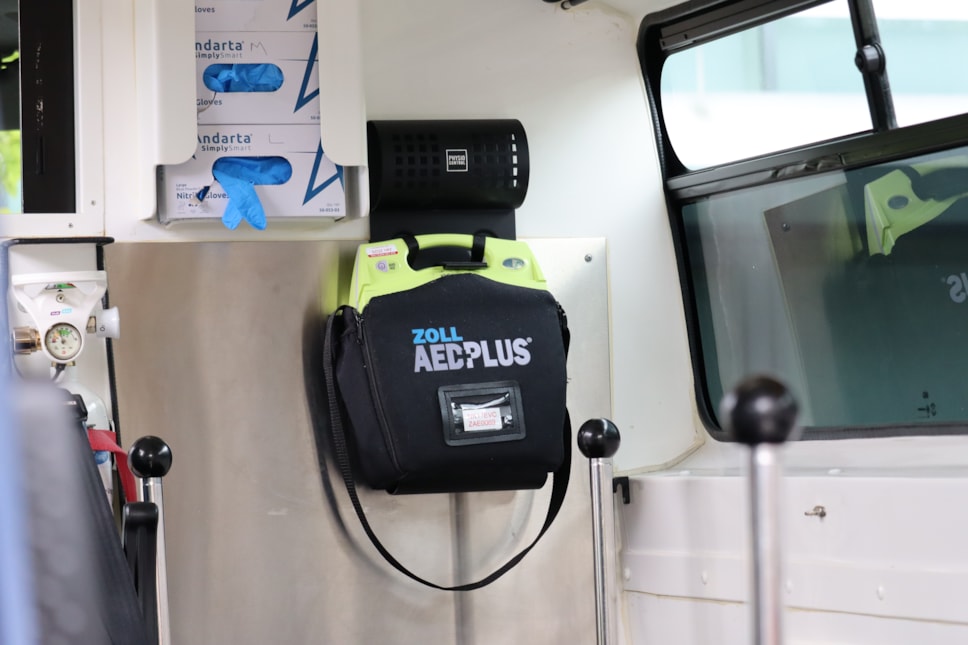
Russell Barnard, a clinical team leader based at Coulby Newham, began a clinical fellowship in April 2025 to explore how information captured by NEAS' ZOLL defibrillators can be used to better understand cardiac arrest care, provide meaningful feedback to crews, and identify opportunities to improve outcomes for patients across the region.
The fellowship forms part of NEAS' wider commitment to innovation, research, and continuous improvement, ensuring colleagues have the tools and support they need to deliver the highest standards of care.
Russell said: "From becoming a student paramedic, I've always had an interest in cardiac arrest. Ultimately, we do this job to keep people alive and, as a profession, I think it's something we're very good at. As a clinical team leader that's a big part of our role and, since taking on this role, my interest has grown even more.
"To be able to get more feedback from the ZOLL devices should mean we're able to improve that care even more and improve survival rates. I'll be looking at trends and developing a feedback mechanism for clinical team leaders, whether that's a post-incident debrief, giving praise where it's due or providing constructive feedback.
"As a clinical team leader, I'll be the one providing that feedback, so it's great to be able to design that process."
The work sits alongside the service's Resus Review programme, which helps teams better understand what happens during cardiac arrest incidents by analysing performance data, celebrating excellent practice, and identifying opportunities for improvement.
More than 20 clinical team leaders and specialist paramedics have now been trained to use Zoll RescueNet CaseReview, enabling them to provide structured post-incident feedback that supports reflective practice and continuous professional development.
Consultant paramedic Lee Thompson, who is overseeing the project, said: "This project will enable us to use the full functionality of the equipment to help us not only improve the care we provide our patients but also develop our knowledge and understanding of what happens in a cardiac arrest."
By reviewing measures such as CPR rate, compression depth, pauses, and ventilation rate, clinicians can gain valuable insights into resuscitation performance and identify ways to further improve patient care.
The project also draws on international best practice, recognising that survival rates from cardiac arrest are higher in some countries and that learning from these systems can help improve outcomes across the North East.
Clinical fellowships give colleagues the opportunity to step away from their day-to-day role and focus on projects that drive innovation, develop services and improve patient care.
As the project continues, the next phase will focus on expanding training, strengthening collaboration between clinical and informatics teams, and sharing learning across the organisation.
By combining research, technology, and staff development, NEAS is continuing to build on its ambition of improving cardiac arrest outcomes and helping save more lives across the North East.