From voice to impact: why staff networks matter at NEAS
At the North East Ambulance Service (NEAS), staff networks are a core part of how we deliver safe, effective, and inclusive services - not only for our people, but for our patients and communities.
Across the NHS, there is a strong evidence base linking staff experience to patient outcomes. Organisations that engage, listen to, and support their people consistently deliver better quality care, improved safety, and stronger patient satisfaction.
Director of people and development at NEAS, Karen O’Brien said: “Staff networks are far more than engagement forums at NEAS - they have become a critical mechanism for improving staff experience, strengthening organisational decision-making, and ultimately improving patient care. Here, they play a unique role by translating lived experience into actionable insight. This helps us to identify risks earlier, improve staff wellbeing and retention, design more inclusive services and strengthen teamwork.
“In an operational service like ours - where staff work under intense pressure and in diverse community settings - this insight is critical. It supports more responsive services, better communication, and safer interactions with patients from all backgrounds.”
At NEAS, staff networks provide a structured and credible route for turning the voice of our colleagues into organisational action. They are a trusted, collective voice, they provide peer support, they can be a direct line to executive leaders, they check and challenge decisions and they co-produce key Trust policy and guidance.
Karen continues, “One of the key lessons we share is that our staff networks are embedded into how we operate, not positioned alongside it. This ensures that staff insight from colleagues consistently informs operational and strategic decision-making - from everyday practice to organisational policy.”
For this to work in practice, this means that we have:
- Executive and non-executive sponsors for each network who show up and immerse themselves in being part of the network
- Protected time for network leadership
- Regular engagement with senior leaders, including the Chief Executive and Chair
- Direct input into Board discussions and strategic priorities
Karen continues: “The value of our staff networks is not abstract - it is practical and measurable. Together we are reducing inequalities in staff experience, improving psychological safety and speaking-up cultures, strengthening culturally competent care, building trust with diverse communities and enhancing resilience during major incidents and periods of system pressure.
“But we recognise that this work comes with challenges. Network leaders often operate without formal authority, manage emotionally complex issues, and balance their roles alongside operational demands. Addressing this requires clear governance and escalation routes, visible senior leadership support, protected time and resource and recognition of the expertise networks bring. Recently we have introduced peer support via our in-house mental health team to ensure our network leaders continue to thrive.
“These are not ‘nice to haves’ - they are essential for sustained impact.”
As NHS organisations and emergency services continue to address workforce pressures, health inequalities, and improving patient outcomes, staff networks offer a practical, scalable model for progress.
Karen concludes, “Because the evidence and our experience, point to the same conclusion: when we listen to our people and act on what they tell us, we create better workplaces - and better care.
“And that is why at NEAS, we continue to be guided by one simple principle: we are better together.”
Delivering measurable impact: 2025 highlights from NEAS staff networks
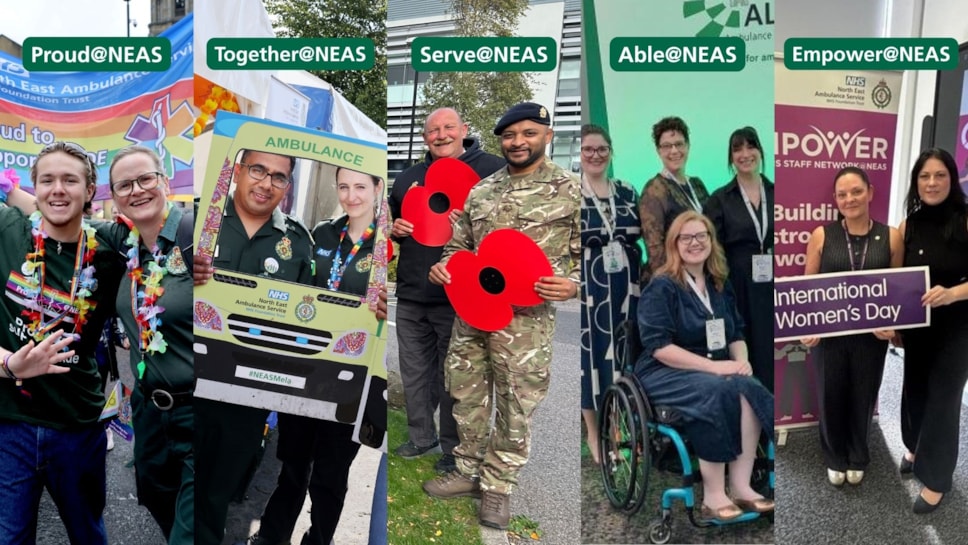
Able@NEAS co-produced neurodiversity training for emergency operations colleagues, improving managers’ confidence and supporting more effective workplace adjustments—directly contributing to safer, more inclusive working environments.
Empower@NEAS influenced menopause and uniform policy, addressing practical barriers that affect staff wellbeing, attendance, and retention - key factors in maintaining safe staffing levels with the diverse, female workforce we have.
Proud@NEAS strengthened engagement with LGBTQ+ communities through Pride events and regional NHS collaboration, supporting more inclusive patient interactions and improving trust in services.
Serve@NEAS improved support for reservists and service families, contributing to Armed Forces Covenant Gold status and national recognition—strengthening NEAS’s position as an inclusive employer.
Together@NEAS influenced call handling guidance and hate crime reporting processes, embedding a zero-tolerance approach to abuse and improving both staff safety and patient interactions. They also brought lived experience into emergency preparedness planning, ensuring responses are culturally aware and community-informed.