NEAS accelerates major sustainability upgrades to improve patient care and prepare for an electric fleet
NEAS has completed a series of significant sustainability milestones that are already improving patient safety, strengthening operational resilience and reducing environmental impact across the region.
The programme - led by the environmental and sustainability team - marks one of the most ambitious periods of green investment in the Trust’s history.
£2.2 million secured for rapid electric vehicle charging
A headline achievement this year is the team’s success in securing £2.2 million in national funding to install rapid electric vehicle (EV) charging infrastructure at seven ambulance stations. The rollout will see 46 new high‑powered charging ports installed, capable of bringing emergency vehicles to 80% charge in around 15 minutes.
These new chargers will expand the Trust’s existing network to 113 ports by the end of the year, preparing NEAS for the transition to a future electric ambulance fleet.
For patients, this means greater reliability and service continuity. Rapid‑charge capability ensures electric ambulances can be deployed safely in real‑time emergencies without compromising response times. For staff, the new infrastructure helps modernise the fleet and reduce reliance on diesel - creating quieter, cleaner working environments around stations.
Supporting national ambitions while protecting local operations
The charging programme forms part of the wider NHS Net Zero Travel and Transport Strategy and demonstrates NEAS’s ability to align local delivery with national ambition. Crucially, the plans have been designed around the realities of frontline operations - ensuring charging infrastructure enhances, rather than disrupts, emergency workflows.
The team has also played a leading role in regional collaboration, helping secure a joint commitment from seven NHS Trusts and the North East and North Cumbria ICB to reduce vehicle idling and promote no‑idling across NHS sites. This initiative is improving air quality near stations, benefiting staff and local communities.
Expanding renewable energy across the estate
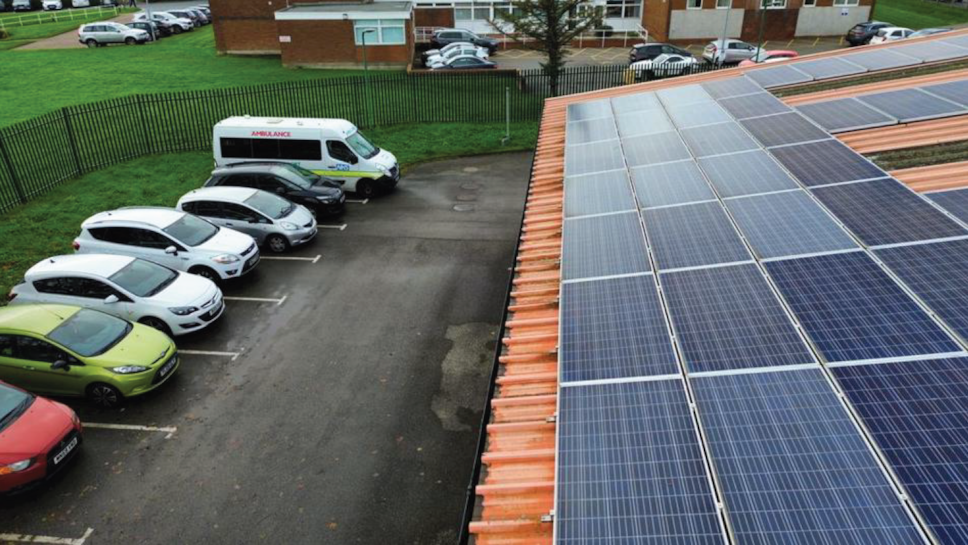
The Trust continues to grow its renewable energy programme, with new solar photovoltaic (PV) systems now being installed at Vancouver House and Fishburn ambulance station. These add to an already extensive solar network that has delivered:
- 30 Solar PV projects across the estate
- 3.5 million kWh of renewable energy generated
- £50,000 in annual electricity savings
- A combined energy value of around £700,000
In addition, micro‑wind turbines installed at two major stations are generating between 6,000 and 12,000 kWh of clean energy per site each year.
Reducing emissions and future‑proofing the estate
The team has also completed 32 heat pump installations, providing low‑carbon heating to approximately 75% of the owned and leased estate. These upgrades have contributed to:
- £300,000 in net energy cost savings to date
- An expected £1 million+ lifetime saving in gas costs
Since the Trust’s first carbon management plan in 2012/13, NEAS has reduced Scope 1 and 2 carbon emissions by around 65%, demonstrating long‑term commitment to decarbonisation and energy resilience.
Safer, greener sites for staff and patients
Beyond energy and transport, the environmental and sustainability team has strengthened toxic waste management and environmental compliance, improving site safety and reducing potential risks to both staff and patients. Improvements to waste processes also support NEAS’s reputation as a responsible, forward‑thinking healthcare organisation.
Putting patient care at the centre of sustainability
What sets this work apart is the team’s consistent focus on real‑world impact. Cleaner energy and reduced emissions are directly improving air quality around sites. More efficient buildings and vehicles are helping cut running costs—freeing resources to be reinvested into frontline care. And future‑proofed estates mean staff can operate in safer, more reliable environments.
Through innovation, collaboration and a clear commitment to patient‑centred sustainability, NEAS is demonstrating how environmental leadership can strengthen performance, resilience and the care provided to communities across the North East.