Spotlight on our service – the frequent caller team
Last year, NEAS dealt with 1,353 patients who frequently call 999 because of unmet medical, social or psychological needs.
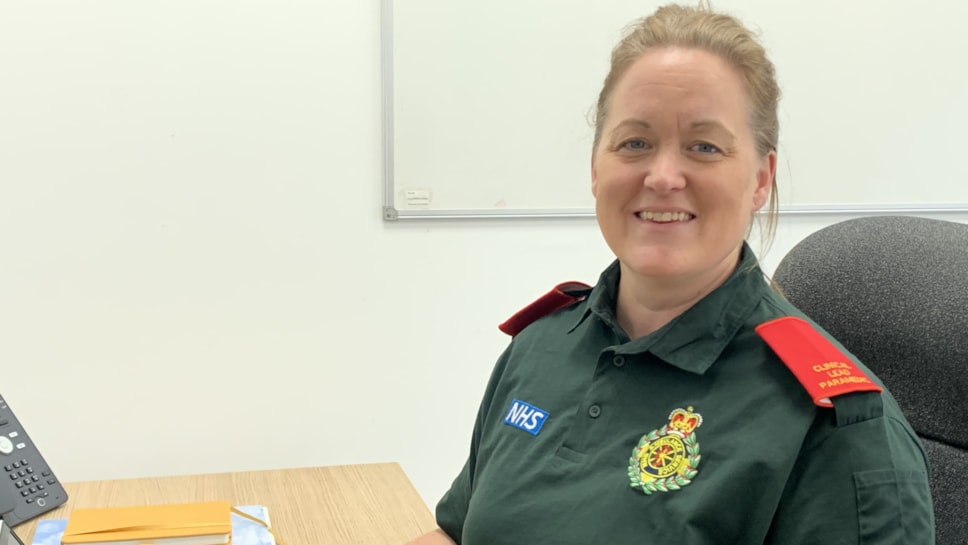
This month, we caught up with Carrie Ingram, the clinical lead for our frequent caller team, the team responsible for supporting these patients.
What do you and your team do?
We identify frequent callers, explore the reasons behind their repeat contact, and coordinate multi‑agency plans to address those needs. Our remit includes patient engagement, personalised care planning, and close partnership working. Our goal is to understand what’s driving those repeated calls and help the wider system provide personalised, proactive support.
Internally, we work closely with EOC, road crews, safeguarding, risk teams, and operational managers to share risk information and support safe decision-making. Externally, we collaborate with GPs, mental health services, social care, housing providers, police, and third‑sector organisations to create coordinated support that helps reduce crisis‑led behaviour.
We also monitor how well plans are being followed and respond to concerns raised by clinical or operational colleagues.
We provide detailed case information, safety plans, and guidance that help call‑handlers and frontline crews manage complex patients more safely and confidently.
As the clinical lead for the team, I use my clinical background as a paramedic to recognise red flags, assess risk, understand clinical histories, and guide safe decision-making when designing support plans. It also helps me explain the clinical context to partner agencies and support non‑clinical colleagues in managing complex cases compassionately and safely.
What difference does your team make to patients and the wider health service?
With our support, patients receive more stable, personalised support that focuses on the root causes of their difficulties – not just short-term crisis responses. This improves their safety, reduces anxiety, and helps them engage with the right services at the right time, leading to better long‑term outcomes.
Responses vary widely. Some patients feel relieved that someone is taking the time to understand their situation, while others may decline support. Every case is different, and people’s needs can change considerably over time.
However, once a robust support plan is in place, many patients show a sustained reduction in calls, helping ensure emergency resources are available for life‑threatening situations.
One recent example was a patient who had been experiencing unmanaged anxiety and social isolation, who had contacted 999 several times each week. They often refused help and felt their existing support wasn’t meeting their needs. After challenging the pathway and working closely with the agencies involved, we created a multi‑agency plan with their GP, a mental health worker, and a voluntary‑sector befriending service. With regular check-ins and a clear crisis plan, the patient said they felt “listened to and supported” for the first time, and their calls reduced significantly.
What’s it like to work in your team?
Working within the frequent caller environment can be incredibly rewarding, but it can also be challenging in ways that aren’t always visible. We often work with patients who have very complex needs, limited support, and long‑standing barriers to engagement. Progress can be slow, and it can feel frustrating when services are stretched or when gaps in the system mean people don’t receive the timely support they need. Despite this, the role matters enormously. Every small step forward, a reduced call, a safer plan, a patient who finally feels heard, makes a genuine difference. What we do relies on strong relationships, shared responsibility, and the willingness of multiple agencies to work together. My hope is that by continuing to highlight both the challenges and the impact, we can keep improving the way we support some of the most vulnerable people who turn to 999 for help.