EMBARGOED UNTIL 13:00 - 10/11/2026: Winter safety campaign highlights ambulance response as October road traffic incidents rise
North East Ambulance Service (NEAS) is highlighting how its teams respond to serious road traffic collisions as part of its wider winter safety campaign, which aims to help communities across the North East to be winter ready.
In October 2026 alone, NEAS attended more than 300 road traffic incidents, up from around 260 incidents in October 2025 and 240 in October 2024.
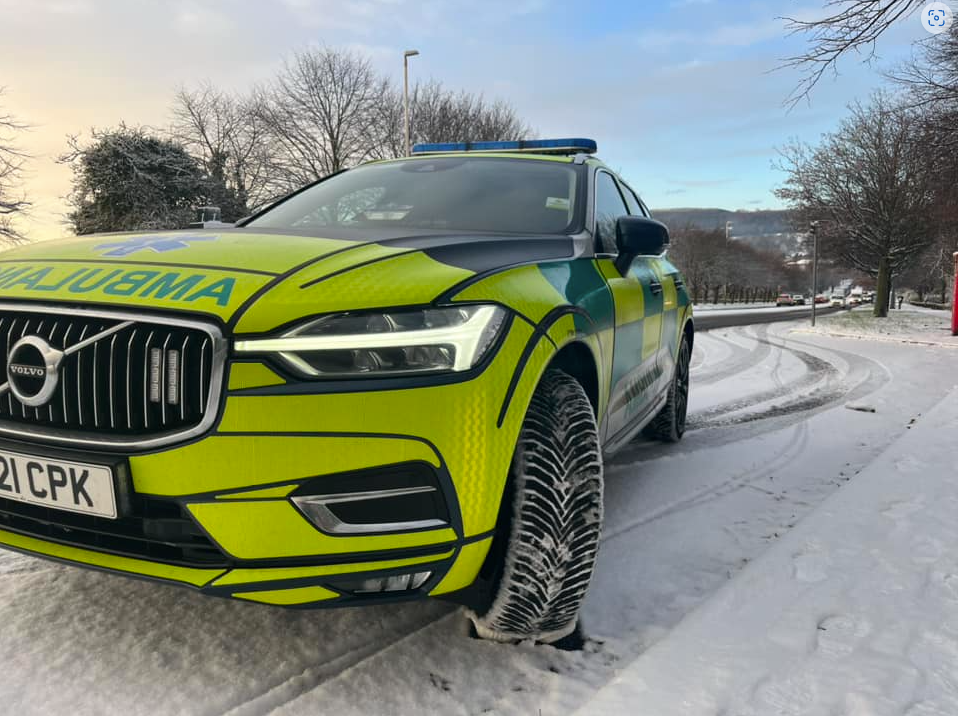
The activity forms part of NEAS’s wider winter safety campaign, sharing practical advice to help communities stay well, stay safe and be winter ready, starting with road and severe-weather safety.
The warning comes ahead of Road Safety Week, which runs from 15 to 21 November. Last winter, between October 2025 and February 2026, NEAS attended more than 1,300 road traffic incidents across the region.
To demonstrate how its teams prepare for and respond to serious collisions, NEAS crews and ambulance commanders took part in a simulated road traffic collision, recreating how they would manage a complex scene involving multiple casualties.
Clinical team leader Rebekah Hunter said: “Road traffic collisions can be challenging for our crews, particularly during the winter months when darkness, poor visibility, freezing temperatures and severe weather can make an already difficult scene even more complex.
“As a clinical team leader, my role is to support crews at these incidents, from helping with clinical and operational decision-making to coordinating the response and making sure colleagues have the welfare support they need.
“Our crews are always here when people need us, but we also want to help prevent incidents where we can. Through our winter safety campaign, we’re encouraging everyone to take simple steps to protect themselves and others as the darker nights and winter weather return.”
When a 999 call about a road traffic collision comes into NEAS, a health advisor gathers key information about what has happened, the number of people involved and their injuries to assess the call and determine the appropriate response.
The incident is then passed to dispatch in NEAS’s emergency operations centre, where teams identify and send the closest appropriate resources. For more serious or complex incidents, the critical care desk can review the response and consider whether additional specialist resources are needed, including specialist or rapid response paramedics and support from partner organisations.
As part of the demonstration, ambulance commanders showed how ‘10-second triage’ can be used at incidents involving multiple casualties to rapidly assess patients and identify those requiring the most urgent care.
Deputy head of emergency preparedness, resilience and response (EPRR) Andy Sessford said: “When crews arrive at a serious road traffic collision involving multiple casualties, there can be a lot happening at once. We need to quickly establish how many patients are involved, assess their condition and identify who needs our help most urgently.
“Ten-second triage allows us to make that initial assessment quickly and consistently. It helps ambulance commanders build an early picture of the scene, prioritise patients and make decisions about how best to use the resources available to us.”
Having worked as a qualified paramedic at NEAS for 10 years, specialist paramedic in critical care Thomas Mortillaro provides advanced clinical support at high-acuity incidents, including serious road traffic collisions.
Thomas said: “As specialist paramedics in critical care, we can be called to some of the most seriously ill and injured patients. Our role allows us to provide advanced clinical assessment and treatment at the scene, working alongside ambulance crews and other emergency services to support patients who may have complex or life-threatening injuries.
“If you come across a serious collision, call 999 and give the call handler as much information as possible about what has happened and your location. What3words can help identify your location, particularly on rural or unfamiliar roads.
“Most importantly, never put yourself at risk by entering a live carriageway. Keep yourself safe, follow the instructions of the call handler and wait for the emergency services to arrive.”
As part of its winter safety campaign, NEAS is encouraging everyone to take simple steps to reduce their risk on the roads, including checking their vehicle before travelling, allowing extra time in poor weather and never driving while distracted, under the influence of alcohol or drugs, or overly tired.
The road and severe-weather phase are the first part of NEAS's wider winter campaign, which will also focus on flu and winter illness prevention and supporting people living with respiratory conditions such as asthma and COPD.
The campaign's message is simple: stay well, stay safe and be winter ready.
More advice is available on the NEAS winter safety advice webpage: https://www.neas.nhs.uk/community-learning/winter-safety-advice
Notes to editors
Notes to editors:
Further information: More context on the wider NEAS winter safety campaign is available in the campaign launch story, alongside practical advice on the NEAS winter safety advice webpage.